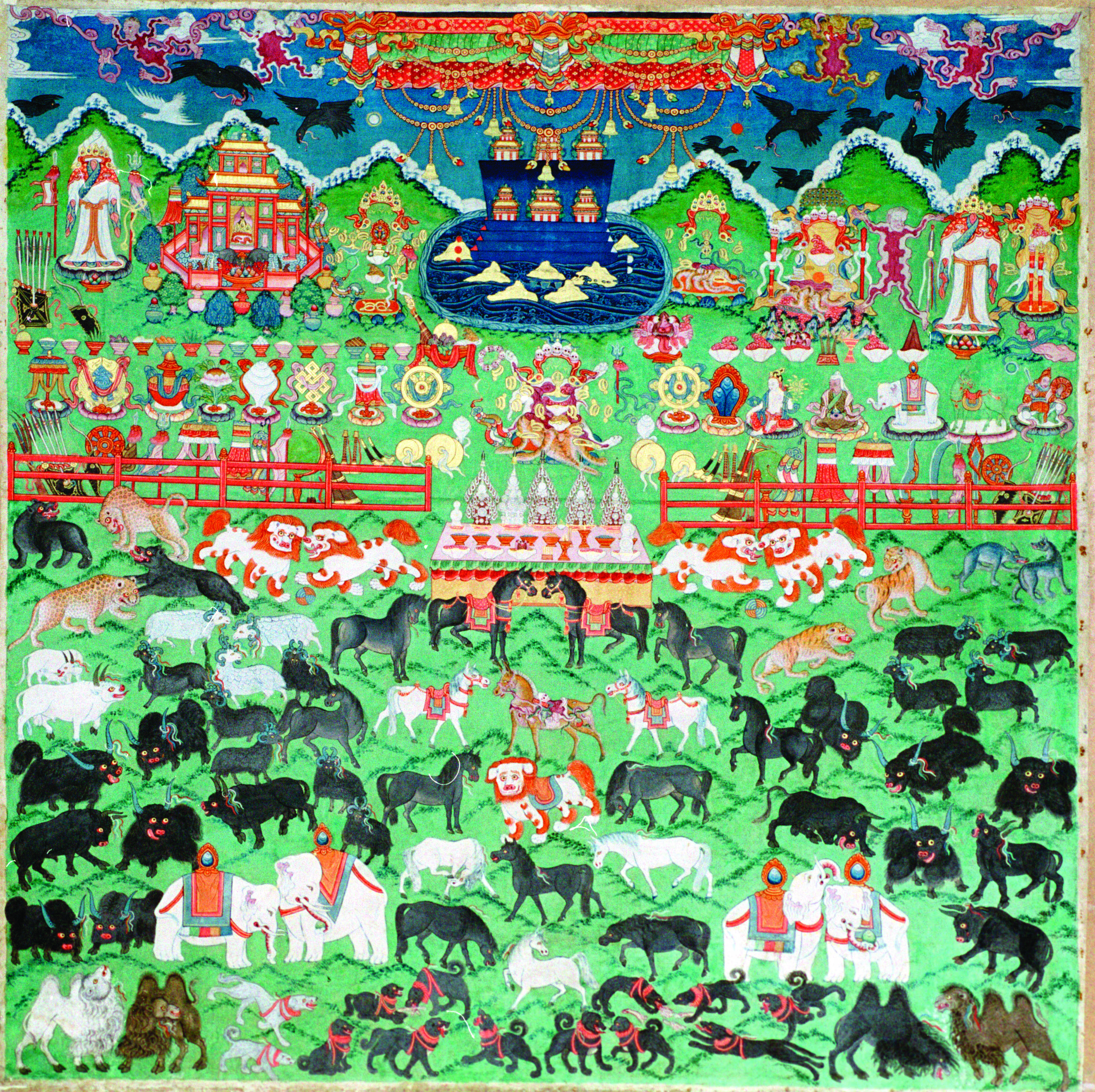
In the centre of this offering thangka are the attributes, apparel and accoutrements of the protector deity, Mahākāla, rather than his full iconographic form. Above is a representation of temples on Mount Meru, shaded by an ornate parasol and surrounded by an ocean of peaks. Mahākāla’s messengers, a flock of black ravens, soar through the sky. The upper register of the painting contains a golden palace, the apparel and accoutrements of other deities, flayed skins, secret offerings of nectar and blood, the eight auspicious emblems, the seven possessions of the cakravartin, weapons and musical instruments. Below the fence is a table of torma and other offerings; and in the lower register, thirteen species of animals. These include snow lions, tigers, precious white elephants, yaks and domestic beasts. The animals signify various characteristics; for example, the dog represents greed, the horse symbolises jealousy and the cow obstinacy. It is said that these thirteen animals represent the ten directions and the three states of past, present and future. This type of offering thangka known as rgyan tshogs (assemblage of ornaments) is hung in the protective chapel (T. mgon khang) of a monastery.