Дамдин

ЭЗЭМШИГЧ БАЙГУУЛГА

Дүрслэх урлагийн музей

ТАЙЛБАР

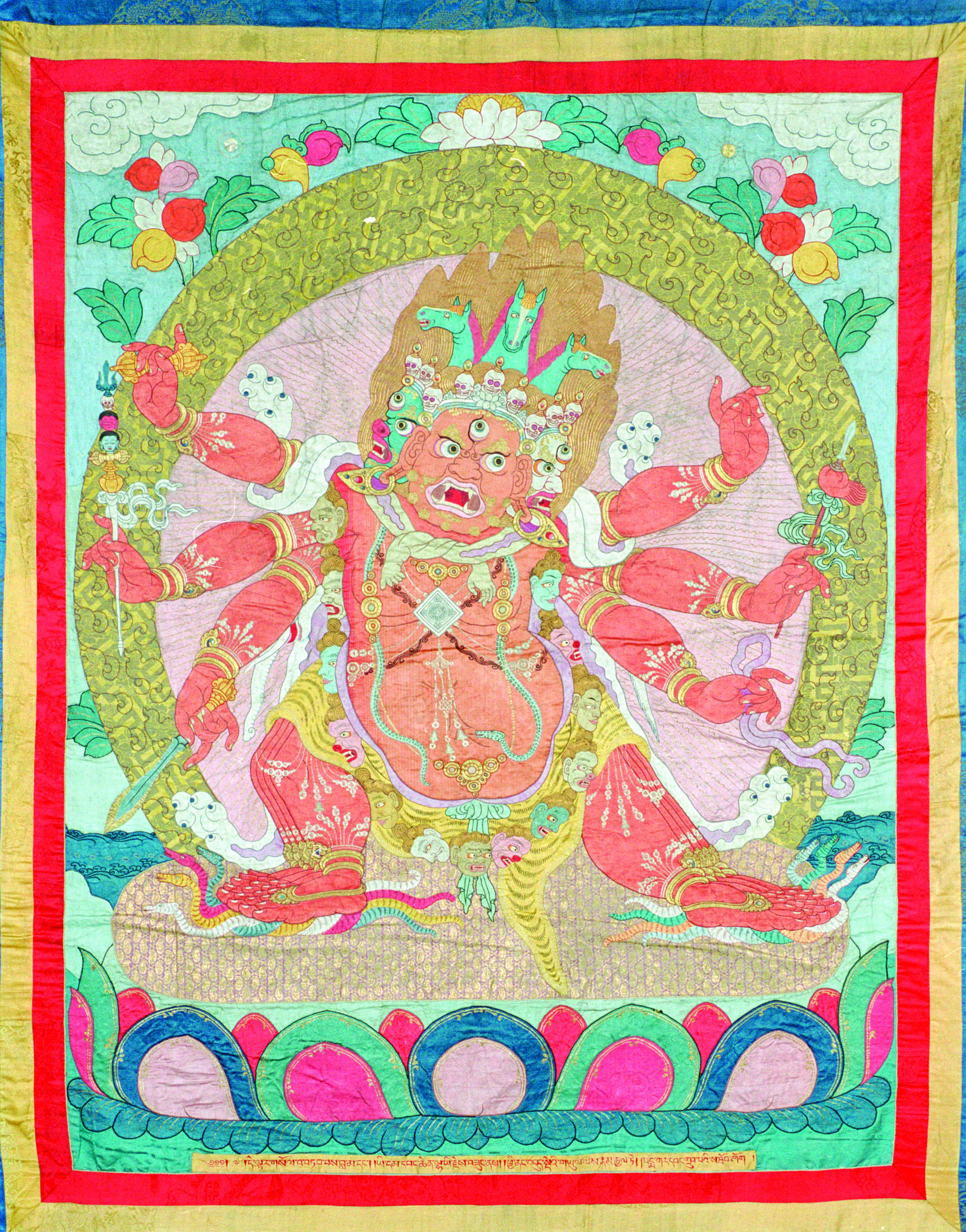
Морин хоолойт Дамдин бурхан хэмжээлшгүй хилэнт дүртэй, улаан өнгөт лагшин, гурван тэргүүн, зургаан мутар, найман бойвтой. Голын тэргүүн улаан, баруун нь ногоон, зүүн нь цагаан өнгөтэй, тус бүрдээ эргэлдсэн гурван мэлмийтэй, ярзайсан соёо шүдтэй бөгөөд тэргүүндээ янцгаасан гурван хөх морины толгойтой. Баруун гурван мутартаа очир, хадамгай, очир бариултай илд барьж, зүүн дээд мутраараа занах мутарлага үйлдэн, жад, хүний өлөнгөөр хийсэн цалам барин хөлдөө найман могойг гишгэн зогсоно. Тэрээр хүний гавал титэм бүхий зургаан зүйлийн ясан чимэг, тавин хүний нойтон толгойн эрих хүзүүндээ зүүж, хүний өвч арьс, зааны арьсан нөмрөг хөдөрчээ. Галын дөл бадарсан гэрлэн туяа цацруулан орших түүний дээгүүр цэцэг, жимс хүрээлнэ. Бүтээлийн доод хэсэгт “Энэ мэт мөргөн залбирснаар багш хийгээд ядам бурхан Хаянхирваа даган барьж, гадна болон дотны шулмасыг тийн ялж, Цагаан лянхуан эрхтний газрыг олох болтугай” хэмээн бичжээ. Дамдинсандүв бурхан Жанрайсиг бурханы догшин дүр юм. Монголчууд түүнийг адууны сүлд тэнгэр хэмээн дээдэлж, зүрхэн тарнийг нь хурдан морины хүүхдүүд уянгалуулан гийнгоолдог. Энэхүү бүтээлийг Дайчин Бэйсийн хошууны харъяат Их хүрээний уран Цэнд урлажээ.

Hayagriva

OWNER ORGANIZATION

Zanabazar Museum of Fine Arts 95-678

DESCRIPTION

Hayagrīva, ‘The Horse-Necked One’, has a red body, three heads, six arms and eight legs. His main face is red, his right green and his left white; each is depicted with three round eyes and fanged teeth. He is adorned with body ornaments and a skull crown, and his upward streaming hair is ornamented with three horse’s heads. In his right hands he holds a vajra, trident and sword; his upper left is in the karaṇa or mesmerizing mudrā and his other two left hands hold a spear and a noose of intestines. He wears a snake and a garland of freshly severed heads around his neck, a tigerskin dhotī, and capes of human and elephant skin. A Tibetan inscription at the base of the thangka reads: We may attain the place of White Lotus ruler upon defeating inner and outer demons with the protection of Guru and Hayagrīva by the virtue of paying homage to them. Hayagriva originated in the Hindu pantheon, absorbed by Indian Buddhism in the 6th century as a protector-king. He is a wrathful manifestation of Avalokiteśvara, especially revered by Mongolians because of his affiliation with the horse. This masterful appliquй was created by Tsend of Ikh Khuree in the 19th century. It shows great skill, particularly in the depiction of the flaming aureole, the adornments of the deity and the surrounding flowers.

 

© 2026 Шүтээн урлаг дахь Морин эрдэнэ · Гэрэл зургийн үзэсгэлэн